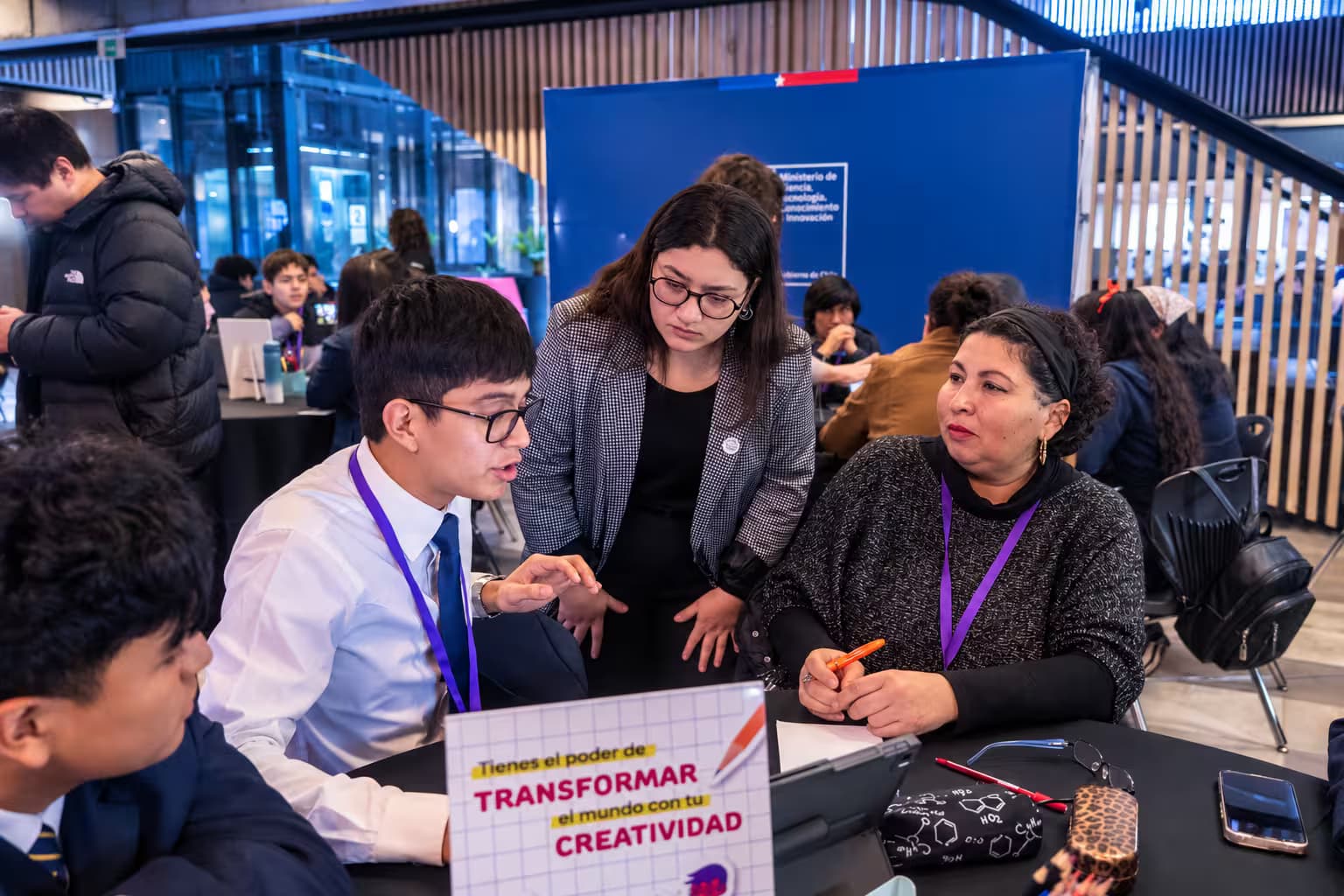
On July 27, 2026, more than 100 students from 25 school teams in Chile's Metropolitan Region participated in an innovation bootcamp that connected scientific research, local challenges, and artificial intelligence.
The gathering brought students and teachers together with specialists from the scientific and technology sectors. Their challenge was practical: refine a problem, explore possible responses, turn the strongest idea into a prototype, and explain it clearly to others.
Technology with a purpose
The projects began with problems rooted in everyday life. Teams worked on ideas including bacterial biofilters for pharmaceutical waste in water, canine prostheses made with biomaterials, accessible automated irrigation, piezoelectric floors capable of generating energy, and tools for monitoring emotional well-being in school communities.
These examples matter because they move technology away from abstraction. Science, engineering, and digital tools become meaningful when students can connect them to a person, a community, or a challenge they recognize.
AI as a creative partner
During the bootcamp, artificial intelligence supported the process of researching, questioning, and prototyping. It was not presented as a replacement for teamwork or critical thinking, but as another tool students needed to understand, evaluate, and use responsibly.
That distinction is essential. Learning about AI should involve more than generating quick answers. It should help young people ask better questions, examine limitations, identify risks, and make informed decisions about when technology adds real value.
From passive users to active creators
Experiences like this show what becomes possible when students are trusted to create. Building a prototype requires curiosity, collaboration, communication, and the willingness to revise an idea after it fails. Those abilities remain valuable regardless of how technology changes.
For Quark Foundation, this is the most promising role of educational technology: expanding the capacity of people to understand their environment and transform it with purpose.
This article is an initial editorial adaptation based on the original report published by Chile's Ministry of Science, Technology, Knowledge and Innovation. It will be refined with original reporting and commentary.